


The best fielder in cricket history is a debate, not an official statistic. My editorial choice is Jonty Rhodes, because he changed what teams expected from a specialist fielder. Ravindra Jadeja, Ricky Ponting, AB de Villiers and the other names below make strong cases in different parts of the job. This ranking uses documented catches, direct hits, run-outs, athletic range, reliability and impact. Cricket has no complete historical runs-saved database, so I do not invent totals.
In This Guide
Key Takeaways
– Jonty Rhodes is my No. 1 for ground fielding, anticipation and the lasting effect of his 1992 World Cup run-out of Inzamam-ul-Haq.
– Steve Smith owns the separate Test non-wicketkeeper catches record in the research snapshot: 224, ahead of Joe Root’s 220.
– Ravindra Jadeja is the best Indian all-round fielding package in this group, while Suresh Raina has India’s strongest ODI catching record among the candidates.
– Direct-hit skill, close catching, boundary work and ground coverage are different skills. A career catches table cannot settle the whole debate.

Best Fielders In Cricket History: Three Evidence Cards
Compare the overall fielding pick, the separate Test catches record and the leading Indian option.
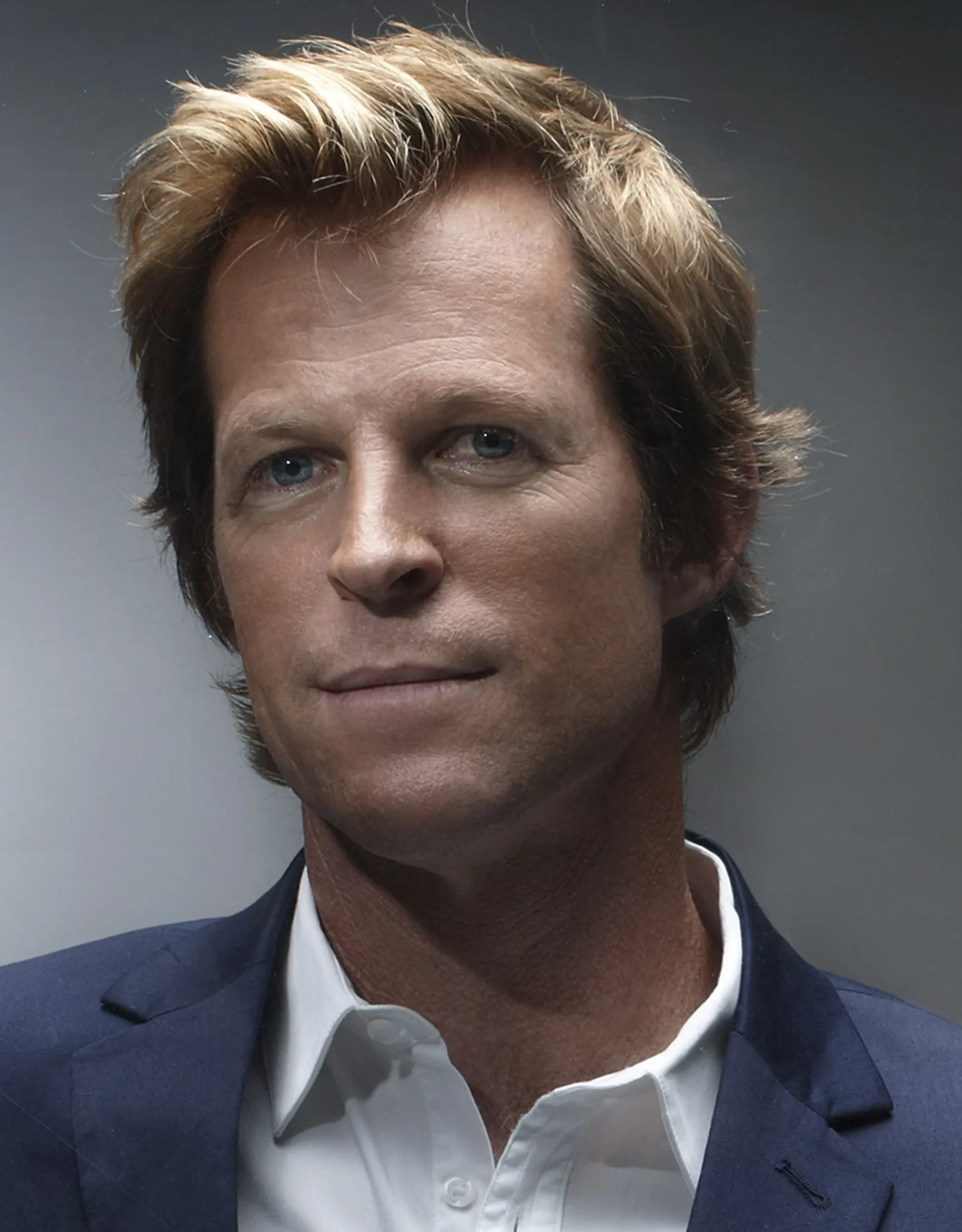
Editorial Winner
Jonty Rhodes
No. 1 for backward-point range, anticipation and the 1992 World Cup Inzamam-ul-Haq run-out.
Test Catch Record
224
Steve Smith’s Test fielding catches in the checked 16 October 2026 table; Joe Root follows on 220.
Best Indian Package
Ravindra Jadeja
The strongest combination of direct hits, ground coverage, athletic catches and boundary work in this ranking.
Men’s international cricket fielding; research cutoff 16 October 2026
Photo: JontyRhodes8 / Wikimedia Commons, CC BY-SA 3.0 / GFDL.
Who Is The Best Fielder In Cricket History?
Jonty Rhodes is my answer. His 1992 World Cup dive to run out Inzamam-ul-Haq became a defining cricket image, but the case is broader than one famous clip. ESPNcricinfo’s player profile says the moment began the Rhodes legend and describes him as the outstanding backward-point fielder of his era. His international fielding record also includes 34 Test catches, 105 ODI catches and a five-catch ODI innings.
Rhodes combined a low centre of gravity with early movement. He read the shot before the ball reached him, attacked the ball instead of waiting for it, and released quickly from awkward positions. A great inner-circle fielder can prevent a single, create a run-out chance and pressure a batter without a dismissal.
The choice is subjective. Symonds had the stronger all-ground case, Smith the clearest catching record, and Jadeja the most complete package. Rhodes wins for influence.
Top 10 Best Fielders In Cricket History
This is editorial, not an ICC list.
1. Jonty Rhodes
Best skill: Backward-point ground fielding and run-out creation.
The Inzamam run-out at the 1992 World Cup best explains Rhodes. He sprinted from backward point, dived horizontally and broke the stumps while still in motion. It showed that a fielder could attack a batter’s running rather than wait for a mistake.
ESPNcricinfo records 105 ODI catches and 34 Test catches for Rhodes, including five catches in an ODI innings. Those numbers do not fully describe his value because his reputation often stopped easy singles. His limitation is scope: he played before T20 created today’s all-ground expectation. Even so, his influence gives him the top place.
2. Ravindra Jadeja
Best skill: Direct hits, ground coverage and athletic catching.
Jadeja is the strongest modern all-round fielding package in this ranking. ESPNcricinfo describes him as arguably the fastest man on the field and the best fielder of his time. He can field tight, patrol the boundary and throw accurately without a long approach.
His specific signature moment came in India’s 2019 World Cup semi-final against New Zealand, when his direct throw ran out Martin Guptill late in the chase. That play showed the complete Jadeja sequence: fast pickup, balanced release and a target hit from distance. His reputation is not based only on spectacular catches.
Jadeja ranks below Rhodes because Rhodes defined a fielding role. Jadeja’s advantage is breadth, but the comparison remains qualitative because no universal runs-saved dataset covers both careers.
3. Ricky Ponting
Best skill: Close catching, anticipation and competitive pressure.
Ponting was a high-intensity fielder who made difficult chances look like part of the team’s plan. The primary Cricinfo Test fielding table lists him with 196 catches, a substantial record for a non-wicketkeeper.
Ponting’s own 2015 fielding column says a missed run-out or dropped catch could keep him awake because he felt he had failed the bowler. That mindset captures his impact: every chance was a tactical event, not an isolated statistic.
Ponting ranks third because close-catching value and leadership pressure are harder to see in highlights. He has less of Jadeja’s boundary range, but his hands and standards made him central to Australia’s dominant teams.
4. AB De Villiers
Best skill: Athletic range and improvisation.
AB de Villiers could keep wicket, field in the ring and cover the boundary without losing speed or balance. Cricinfo’s profile calls him a fielder able to leap for catches and confirms his wicketkeeping role; his career tables include 222 Test catches, 176 ODI catches and 65 T20I catches, with wicketkeeping appearances included in those format figures. That is why those totals should not be treated as a pure outfielder leaderboard.
A specific example came in the 2025 World Championship of Legends. The Times of India reported that he sprinted in the deep, caught Yusuf Pathan’s ball close to the rope and flicked it in the air to Sarel Erwee, who completed the relay catch. The play showed intelligent use of a teammate.
De Villiers sits below Ponting because wicketkeeping and outfield roles complicate comparison. His athletic ceiling is among the highest here, but role overlap makes a clean statistical comparison unfair.
5. Herschelle Gibbs
Best skill: Outfield speed and attacking catches.
Gibbs was the South African successor to Rhodes as a predatory fielder, according to his Cricinfo profile. The same profile describes him as cutting down batters with electric athleticism. His documented career tables list 94 Test catches, 108 ODI catches and eight T20I catches.
His 108 ODI catches support the visual reputation: Gibbs was not only spectacular but repeatable across a long white-ball career.
He is fifth because his best work was concentrated in the outfield and the record includes occasional lapses. When the ball was in his zone, though, Gibbs could turn a boundary chance into a wicket faster than almost anyone of his generation.
6. Andrew Symonds
Best skill: Power, throwing range and all-ground coverage.
Symonds may be the most complete physical fielder in the list. Cricket Australia describes him as quick, strong and fearless, with the hands to field close and the arm to patrol the rope. Jonty Rhodes was quoted there calling Symonds a true all-round fieldsman and saying he could be better than Rhodes because he was brilliant anywhere.
The specific moment is Symonds’ 2003 World Cup catch of Mohammad Yousuf. Cricket Australia records that he crossed the Wanderers outfield and dived forward to take it with two hands, after his unbeaten 143 in the same match.
Symonds ranks below Gibbs because his career was shorter and comparable fielding data is thinner. His ceiling was extraordinary: ring fielding, boundary work and direct-hit threat in one package.
7. Suresh Raina
Best skill: Inner-circle agility and ODI catching.
Raina was one of India’s most dependable white-ball fielders. ESPNcricinfo’s career analysis records 102 ODI catches, the most by an India fielder during his career, and 42 T20I catches, also India’s leading mark at the time of that analysis.
The clearest moment is his direct-hit run-out of Ricky Ponting in the 2010 Mohali Test. BCCI called it superb fielding against the run of play, a useful example of his quick pickup and accuracy under pressure.
Raina ranks seventh because his career did not carry the same Test volume. In India’s white-ball teams, his low body position, quick hands and attacking instinct made him a major asset.
8. Paul Collingwood
Best skill: Reliability, backward point and difficult catches.
Collingwood was an outstanding fielder before spectacular boundary catches became routine. In an ESPNcricinfo interview, he said backward point was his best ODI fielding position and explained how he used the batter’s shot cues to move before contact. He also named AB de Villiers in his dream fielding team and described the value of quick feet and hip alignment.
His specific documented moment is his own choice: in the same interview, Collingwood said his best catch was Devon Smith at Barbados in the 2007 World Cup because he covered more ground than for his famous 2005 catch of Matthew Hayden. ESPNcricinfo’s IPL catch archive also describes the Hayden catch as an unforgettable example of his athleticism.
Collingwood is eighth because his catching record is less dominant than Smith’s or Ponting’s. He earns the place through reliability and anticipation, not a manufactured run-saved number.
9. Glenn Phillips
Best skill: Modern reaction catching at backward point.
Phillips is the most explosive modern specialist in this group. ESPNcricinfo’s 2025 Champions Trophy analysis described his backward-point catches as near-supernatural and explained that New Zealand deliberately placed him in hot zones where a top fielder can change a match.
The specific moment came against India in Dubai on 2 March 2025, when Phillips flew across from point to catch Virat Kohli. The report says he launched with both feet and reached back to complete it; he had also taken a similar catch of Mohammad Rizwan in the opener.
Phillips ranks ninth because his international sample is still growing. His athletic ceiling belongs near the top, but a shorter career cannot yet carry the same consistency claim as Rhodes, Ponting or Gibbs.
10. Steve Smith
Best skill: Slip catching and sustained Test reliability.
Smith is the statistical outlier in this ranking. The Cricinfo fielding records table used for this article places him first for Test catches by a non-wicketkeeper in the 16 October 2026 snapshot. The current Test catches table checked on 16 October 2026 lists him with 224, ahead of Joe Root’s 220. Earlier Durban record coverage highlighted the four catches that moved him past Root; that milestone and the latest career total are not the same reporting point. The table scope is Test catches credited to a fielder; it is not wicketkeeping dismissals or catches in other formats.
Smith’s specific record is the four-catch South Africa Test that took him past Root. His close catching combines anticipation, soft hands and an unusually long Test career.
He is tenth in this editorial ranking only because the ranking asks for a complete fielding skill set. Smith has the strongest statistical catching case, but Rhodes, Jadeja, Symonds and Phillips offer more evidence of run-out creation or boundary range. This is the clearest example of why a leaderboard and an all-time ranking should remain separate.
How We Ranked The Best Fielders
I used the brief’s qualitative weights: catching and reliability at 30%, run-outs and throwing impact at 25%, ground coverage and athleticism at 20%, consistency across formats at 15%, and documented match-changing moments at 10%. These are editorial weights, not an established cricket standard.
I did not assign numerical player scores because the underlying dataset is incomplete. Run-outs are not consistently credited in historical records. Runs saved are not recorded in one comparable system across eras. Some catch totals include wicketkeeping appearances, while others describe only non-wicketkeeper fielding. The honest method is to use the weights to explain trade-offs, not to create false precision.
Best Fielders In Modern Cricket
Jadeja, Phillips and Smith are the strongest modern cases in this article. Jadeja offers the widest package: inner ring, boundary, direct hit and catching. Phillips has the most spectacular recent reaction catches, especially from backward point. Smith offers the best long-form Test evidence through the non-wicketkeeper catches record.
Modern fielding is easier to compare because matches have more camera angles and specialist training. The evidence is richer, not automatically better.
Most Catches By A Fielder In Test Cricket
This is a separate leaderboard, not the editorial ranking. It excludes wicketkeeper catches and is based on the Cricinfo Test fielding records table, with the Steve Smith milestone frozen to the required 16 October 2026 research snapshot.
| Rank | Fielder | Team | Test catches | Scope note |
|---|---|---|---|---|
| 1 | Steve Smith | Australia | 224 | Non-wicketkeeper snapshot after South Africa Test |
| 2 | Joe Root | England | 220 | Non-wicketkeeper |
| 3 | Rahul Dravid | India | 210 | Non-wicketkeeper |
| 4 | Mahela Jayawardene | Sri Lanka | 205 | Non-wicketkeeper |
| 5 | Jacques Kallis | South Africa | 200 | Non-wicketkeeper |
| 6 | Ricky Ponting | Australia | 196 | Non-wicketkeeper |
| 7 | Mark Waugh | Australia | 181 | Non-wicketkeeper |
| 8 | Alastair Cook | England | 175 | Non-wicketkeeper |
| 9 | Stephen Fleming | New Zealand | 171 | Non-wicketkeeper |
| 10 | Graeme Smith | South Africa | 169 | Non-wicketkeeper |
Cricinfo’s live table can change after a completed match or page refresh. This article uses the 16 October 2026 table snapshot; wicketkeeper dismissals remain a separate category.
Best Indian Fielders In Cricket History
A separate Indian ranking avoids repeating the ten full profiles. Ravindra Jadeja is first for the broadest modern package: direct hits, ground coverage, catches and boundary athleticism. Suresh Raina is second for inner-circle speed and his documented ODI catching record. Rahul Dravid is third for slip catching and his 210 Test catches in the separate table. Virat Kohli is fourth for athletic coverage, throwing and catching across modern white-ball cricket. Yuvraj Singh is fifth for boundary work and pressure catches.
By skill, Jadeja leads direct hits and all-ground work, Raina inner-circle agility, and Dravid close catching. These are editorial categories, not official awards.
Best Fielders By Skill
- Best backward-point ground fielder: Jonty Rhodes, with Glenn Phillips the modern highlight specialist.
- Best direct-hit threat: Ravindra Jadeja, with Suresh Raina’s Ponting run-out as a documented example.
- Best close catcher: Steve Smith by sustained Test record; Ricky Ponting is the broader historical challenger.
- Best boundary all-rounder: Andrew Symonds, because his arm, speed and willingness to dive travelled to every part of the ground.
- Best relay and improvisation: AB de Villiers, whose 2025 Yusuf Pathan dismissal showed awareness as well as athleticism.
Frequently Asked Questions
Who Is The Best Fielder In Cricket History?
Jonty Rhodes is my pick because he combined elite backward-point work, direct pressure on running batters and a transformational effect on fielding standards. It is an editorial judgment, not an official record.
Is Jonty Rhodes The Greatest Fielder Of All Time?
He has the strongest historical claim, but not an uncontested one. Symonds offers greater all-ground power, Jadeja offers a fuller modern package, and Smith owns the leading Test non-wicketkeeper catches record in the specified snapshot.
Who Is The Best Fielder In India?
Ravindra Jadeja is my answer for the complete package. Suresh Raina has the stronger documented ODI catching case among the two, while Rahul Dravid is a leading close-catching specialist.
Who Has Taken The Most Catches In Test Cricket As A Fielder?
Steve Smith leads the non-wicketkeeper Test catches table in this article’s 16 October 2026 snapshot with 224, ahead of Joe Root’s 220.
Are Wicketkeeper Catches Counted In Outfield-Catching Records?
No. A wicketkeeper’s catches and stumpings are a separate statistical category. Some player career tables combine roles across a career, so the scope must be checked before comparing totals.
How Can Fielding Performance Be Measured?
Use catches, run-outs, throwing accuracy, ground coverage, boundary work, consistency and match context. No single number captures the full job because historical runs-saved and run-out datasets are incomplete.
Related Cricket Records
For related records, see most runs in international cricket, most wickets in international cricket, most centuries in international cricket and the Cricket category.
